

Landing Page Design Best Practices for Conversion

Suppose you own a business website and you are using ads and social media campaigns to lure traffic to your website. Thousands of people arrive at your site every month, but most leave without taking any action; they don’t sign up, buy, or engage. This is a common problem many businesses face, which can be solved with an effective landing page design that guides visitors toward a single, desired action.

A beautiful landing page design can solve this issue. It acts as a focused destination for your visitors, guiding them toward a single, desired action. In 2026, with attention spans shrinking and mobile traffic growing, effective landing page design is more critical than ever.

Landing Page Design Best Practices 2026

📌 Quick Summary

  • Convert Faster: Focus on one clear goal with a strong CTA.
  • Mobile-First: Fast, responsive pages reduce bounce rates.
  • Strong Headlines: Benefits + storytelling keep users engaged.
  • Build Trust: Reviews, testimonials, and badges boost confidence.
  • Optimize with Data: Track conversions, heatmaps, and scroll depth.

What Is a Landing Page?

A landing page is a single web page designed for a sole reason, and that reason is to motivate the user to perform a single action.

That could include:

  • Sending or submitting an e-mail
  • Purchasing a product
  • Organizing demo booking
  • Lead Generation

Landing pages are developed to turn passive viewers into interested customers or leads. Not like usual website pages, landing pages have only one objective, which makes them a powerful tool when it comes to carrying out any kind of marketing activities. While doing web development for any type of business, having a high converting landing page is very important for that business.

Why Landing Pages Matter?

Landing pages are critical for your business because they directly impact conversions and revenue. When appropriately designed, they are capable of:

  • Boost conversions by directing the user towards one particular action
  • Reducing bounce rates by eliminating distractions.
  • Unlock business growth by converting traffic to results.

In the following sections, we will examine the concepts of excellent landing page designs in the context of the year 2026.

Landing Page Design Best Practices to do in 2026

1. Use a Strong, Relevant Headline

The headlines attract the first visitors. They ought to demonstrate right from the start:

  • What the page offers
  • Why it matters to the visitor

Successful headlines talk to your audience’s pain and motivations. Headlines such as “Learn More About Our Service” become “Grow Your Business With Proven Tools.” This is one of the first recommendations for landing page best practices.

2. Lead With a Story That Connects

People are wired to respond to stories. A narrative helps visitors relate emotionally to your message:

  • Talk about common problems customers face
  • Show how those issues make life more complicated.
  • Present your solution with clarity.

Including a brief story before the main content draws readers in and makes them more likely to convert.

3. Motivate With Triggers and Benefits

An excellent landing page design motivates visitors by displaying to them why they should take action now. Understanding what constitutes interest-what triggers it, whether internal goals or external challenges an essential part of the design of landing pages.

Use the copy that:

  • Captures attention
  • Highlights positive change
  • Success is explained.

That makes your page more interesting and actionable.

4. Personalize Your Page for Different Users

Not every visitor is from the same location, nor does each of they all have the same needs. A visitor arriving from an email list might know your brand, and a visitor from a search ad may see you for the first time.

Segment your audience and personalize landing page content based on:

  • Traffic source
  • User intent
  • Demographics or location

Meanwhile, personalization increases relevance and creates one of the most efficient landing page best practices for higher engagement.

5. Optimize for SEO and User Experience

Even though many landing pages get traffic from ads, search engine visitors still matter. Landing pages can be made more search engine-friendly for better SEO as well, and this increases the quality of the organic traffic received and makes the landing page rank highly in search engines.

This includes:

  • Incorporation of relevant keywords in the content
  • Simple yet efficient layout
  • Have clear headings and short paragraphs
  • Alternative text on image

This not only increases visibility but also increases the experience offered, which affects conversion.

6. Make It Mobile-Friendly

In 2026, most people will view landing pages on their phones. Mobile responsive web design optimization isn’t optional it’s essential.

Your landing page must:

  • Load fast
  • Display correctly on all screens
  • Have easy‑to‑click buttons

If your mobile experience is slow or confusing, many users will bounce before seeing your message.

7. Use Product‑Specific Imagery

Images tell stories faster than text. Good images give your website visitors an idea of what you are offering them.

Imagery isn’t just used to fill up space. It adds flair to your story and keeps the reader interested. Use:

  • Photos of the product in use
  • Graphic support to copy
  • Charts or images representing results.

Just make sure that the images you use are clear, relevant, and not distracting.

8. Add Credibility and Trust Elements

Trust indicators are essential for overcoming the visitor’s reluctance. The following must be included in your Landing Page Design:

  • Testimonials/ Case Studies
  • Customer logos
  • Awards or industry badges
  • Trust Seals

Such features assure people that your offer is authentic and has real-world proof of success, an essential aspect of a landing page design.

9. Try Product Videos to Boost Engagement

Video marketing can help improve conversion rates by quickly communicating the value and functionality of your offer.

Some video examples are:

  • Product Demos
  • Customer Testimonials
  • Web explainers

Many video formats might make it simpler to communicate ideas and retain viewers on the page.

10. Show What People Say About You

Brand reputation matters. People trust opinions more than advertisements.

Recommendations:

  • Featuring Positive Reviews
  • Demonstrating benefits to others
  • Handling negative feedback as a professional

To develop, posting positive comments creates a way for trust and encourages visitors to feel comfortable converting.

11. Share Competitive Insights

Sometimes visitors are comparing you with others. Adding a comparison section may work well to highlight your strengths.

For instance:

  • Tables for feature comparison
  • Side-by-Side
  • SWOT Analysis

This will help your visitors comprehend why your solution is better than theirs without being off-putting.

12. Plan for Conversion Rate Optimization (CRO)

A landing page should evolve based on performance insights. Making up a CRO plan consists of three components:

  • Drivers – What Brings People to Your Page
  • What stops them from converting – barriers
  • Hooks – what makes them convert

These can be analyzed to enable you to make changes and improve conversion rates.

High-Converting Landing Page Examples To Learn From

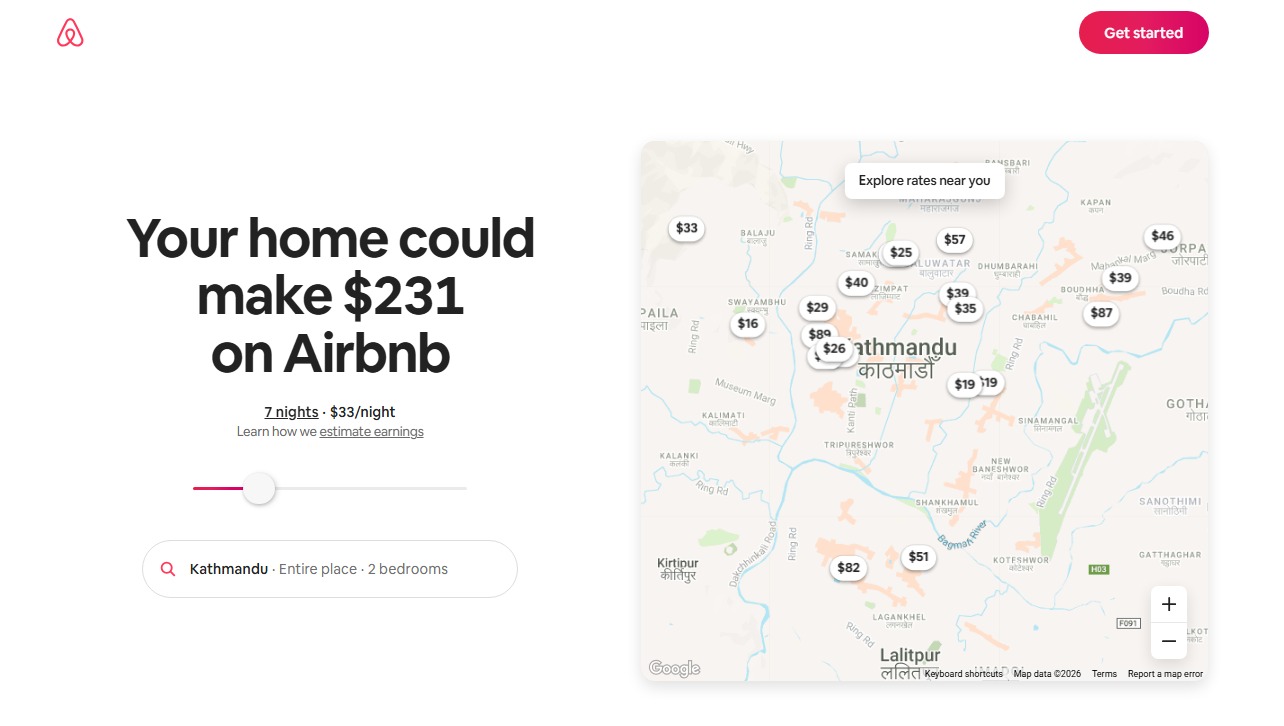
Airbnb Hosting Signup Page

The landing page by Airbnb does not have clutter and is very easy to navigate. The page uses imagery effectively. The page explains the value of hosting and the benefits of joining the platform.

landing page example of airbnb

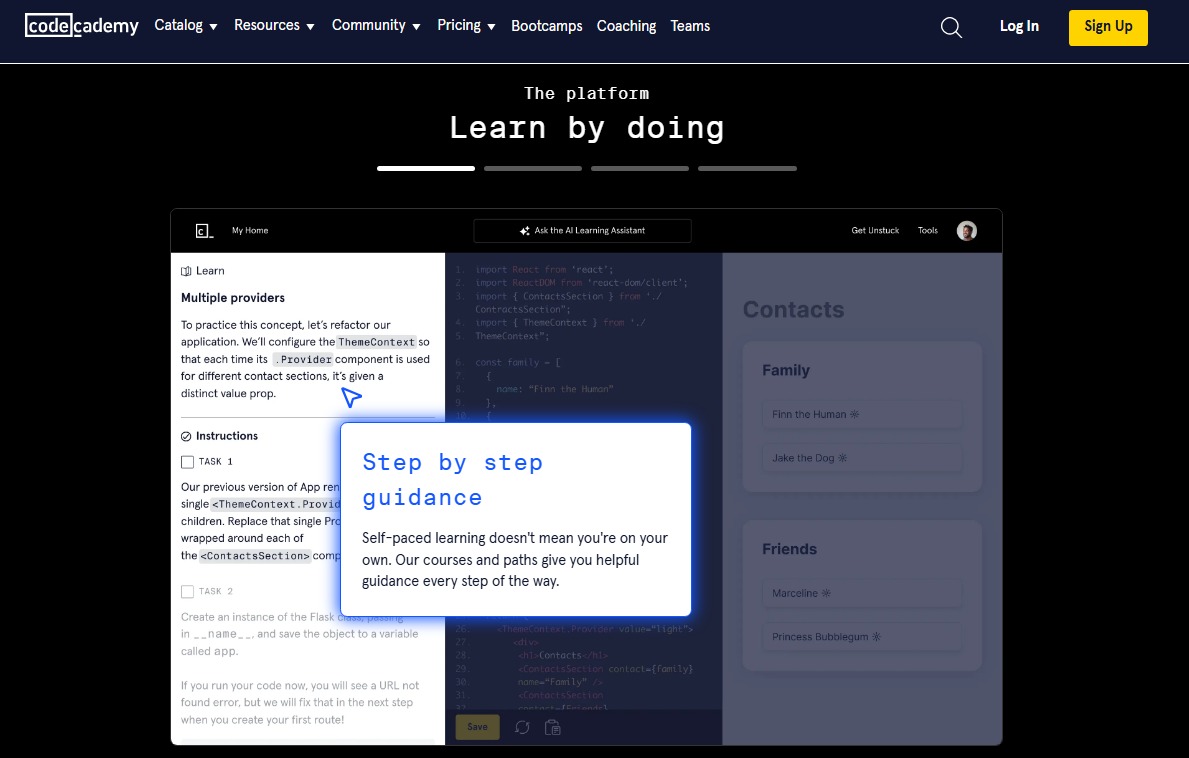
Codecademy Landing Page

Codecademy’s online learning landing page uses clear, benefit‑driven headlines, social proof, and intuitive navigation. This shows how educational or membership pages can guide users gently toward conversion.

landing page example of codecademy

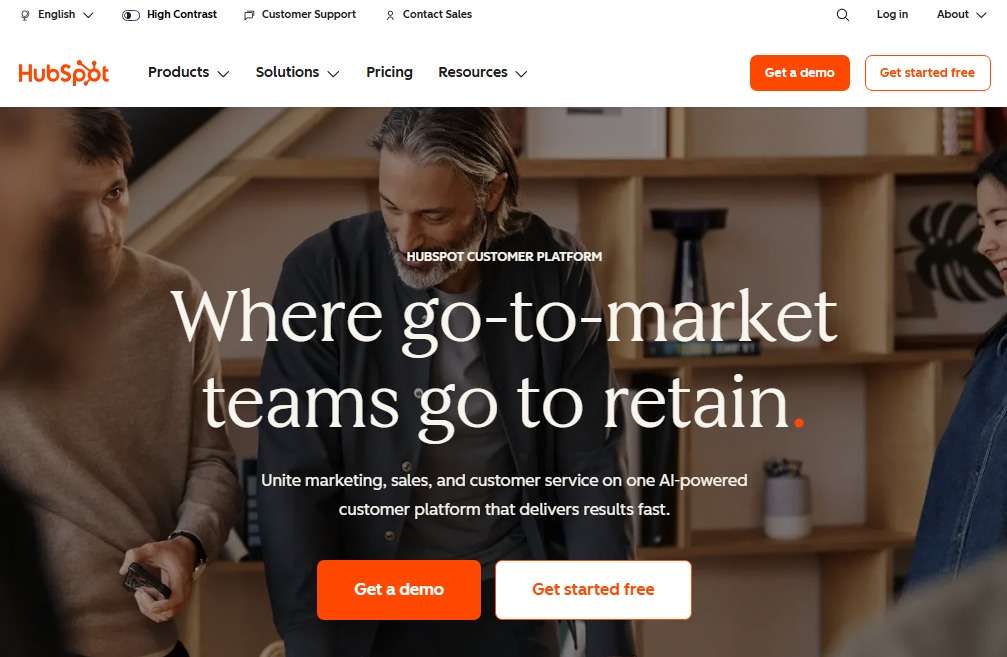
HubSpot

HubSpot’s landing page converts well because it communicates a clear value proposition above the fold, paired with low-friction CTAs (“Get started free” and “Get a demo”) that match different buyer intents. The clean layout, human visuals, and benefit-driven messaging reduce cognitive load and guide visitors quickly toward action.

Metrics You Should Track for Landing Page Success

For the creation of an effective landing page design, it is necessary to monitor and optimize the pages using the collected data. This can be done by measuring the performance and using the following parameters:

  • Bounce Rate: This is the rate at which your visitors are not engaging with your page and are leaving. Studies have demonstrated that if your page has a bounce rate of over 70 percent, there might be improvement needed in messaging and CTAs.
  • Heat Maps: Heat maps help create visual representations of user clicks and hovers or scroll events. Information generated through heat maps informs designers of the parts of the page that receive attention and those that are avoided, and assists in aligning CTAs accordingly.
  • Convert Rate: The most important of all, indicating the percentage of users who perform the action you want them to perform. Landing pages that convert very well usually achieve a conversion rate of 10 to 20% and above.
  • Page Load Time: A 1-second page load delay can result in 7% fewer page conversions, according to studies. A fast website speed optimization is key to keeping the visitor engaged and reducing bounce rates.
  • Scroll Depth: This is the measure of how far down users scroll on your page. Statistics have revealed that users who go below the 50-60% mark on your page are most likely to convert.

This allows you to monitor the metrics and determine areas of bottlenecks and optimize the design of the landing page to improve the performance of the landing page as a whole.

Landing Page Design Best Practices Checklist

Here’s a quick summary of best practices for a landing page that can help you build pages that consistently deliver conversions for you:

  1. Clear and Compelling Value Proposition
    The initial part of a landing page must clearly define its related product or service and its benefit to its customer. Visitors must be able to understand the relevance of its presence on that page at least through their first glance.
  2. Strong, Action-Oriented CTAs
    A key principle for all your landing pages is to encourage users towards only one primary goal. The call-to-action buttons must be phrased in actionable terms, and it is essential to position them where users tend to look.
  3. Minimal and Focused Layout
    A well-designed landing page does not have unnecessary menu bars, links, or content that may distract the visitor from the goal at hand. Using white space, aligning properly, or using a clean layout are effective ways to ensure the visitor remains on the same path.
  4. Responsive Design and Mobile-Friendly
    Given the high use of the landing page by mobile phones, the responsive web design of the page should accommodate different screen sizes. The text should be legible, the buttons ought to be clickable, and the page should display well on all mobile phones.
  5. Trust and Credibility Components
    Including testimonials, logos of clients, reviews, or case study snippets is a trust-building feature. Users trust actual testimonials or familiar names associated with a service or product enough to take the desired action.
  6. Fast Performance and Technical Quality
    Landing pages need to be fast and functional. It includes things like optimizing their images, ensuring code cleanliness, and ensuring that forms function on the page.

Conclusion: Design Landing Pages That Convert

Building effective landing pages for high conversions takes the task of making the page aesthetically appealing to a whole new level. Apply these landing page design best practices, such as the headline, copywriting of benefits, calls-to-action, reducing noise, trust building, and responsiveness, and turn occasional visitors into lifelong clients or leads.

Do not forget the measurement of the metrics, split testing, and continuous optimization of the page using real data. The aim is to have a seamless user interface that leads users on a path to conversion by itself.

Using these best practices, your landing pages are destined to see increased engagement and conversion rates.

Contact Smart Web Care Center Today!

Take your Nepal business to the next level with expert Web design and development Partner. Schedule your free consultation this week and start attracting customers today!

Visit: Gwarko, Lalitpur, Nepal

FAQs About Landing Page Design

What is the primary objective of a landing page?

A landing page is created to promote and encourage a particular action, for example, subscription to a newsletter, buying, or lead generation.

Make use of strong headlines, value propositions, effective Calls-to-Actions, testimonials, and mobile-friendliness. A/B test every element of your landing page to understand what is most effective.

Since over 50% of total Internet traffic is generated by mobile phones, an optimized and responsive landing page would allow viewers to navigate its content irrespective of its size.

Analyze bounce rate, conversion rate, page loading time, scroll depth, and heat maps to analyze where you have room for improvement so you can optimize your landing page.

Yes! With a leading story discussing the problem and its solutions, your page can become more interesting, and conversion can become easier.

Let’s connect and turn your vision into reality.

We are available from 9:00 AM to 6:00 PM, Monday to Friday.
Reach out now!

9867512535

Contact for any query

Ready to grow your business with the leading web development company in Kathmandu? Smart Web Care Center delivers fast, secure, and high-performing digital solutions tailored to your goals. Let’s build something exceptional together.

    WhatsApp